
It was 7.00pm on a Friday when my phone started ringing — and it didn’t stop for a week.
British Airways had introduced a new swipe-card clock-in system for check-in and ticket-desk staff at Heathrow. Within hours, hundreds of employees had walked out. Flights were cancelled, terminals gridlocked, and the weekend news led with images of stranded families and harassed managers.
At the time, I was a union press officer — the person who answers the phone when the world catches fire. What unfolded was more than an industrial dispute. It was a masterclass in how political communication strategy, leverage and listening collide in real time.
Understanding the Stakeholders Behind the Story
What struck me most that weekend wasn’t the disruption, but who was driving it.
These weren’t tabloid caricatures of “union militants.” They were educated, professional women — many former cabin crew — who relied on tightly choreographed family logistics and the informal “tarmac transfer” of childcare between shifts.
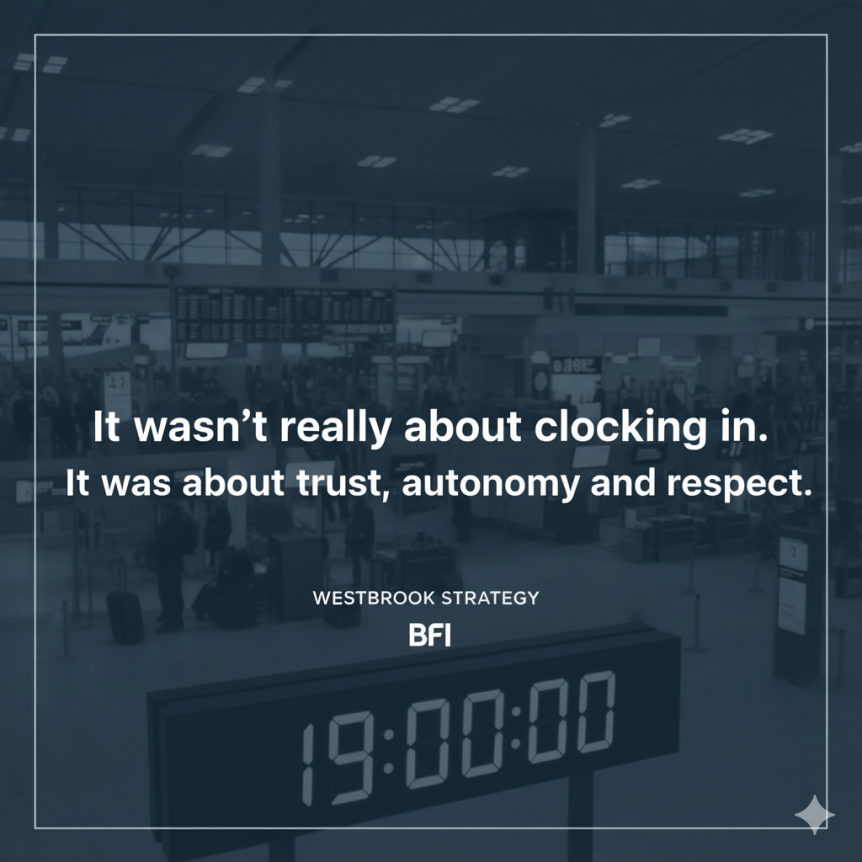
The swipe-card system disrupted that delicate ecosystem. What appeared to management as a minor administrative update carried major personal implications. The issue wasn’t technology; it was trust, autonomy and respect. Any effective political communication strategy begins here: understanding how a technical change refracts through human experience.
Lessons in Leverage — Economic, Reputational and Organisational
The Heathrow walkout revealed multiple layers of leverage:
Economic Leverage
Every grounded aircraft meant millions lost — across aviation, retail and the wider economy.
Reputational Leverage
Images of queues and chaos dominated the news cycle, applying rapid brand pressure.
Organisational Leverage
Professional and technical staff — often overlooked in traditional organising — discovered their collective voice.
This was a pivotal moment for unions and employers alike: influence could arise from unexpected parts of the workforce.
For public affairs teams, the episode remains a case study in understanding where power sits, how it moves and how quickly the narrative can shift. These are the same dynamics that underpin modern political communication strategy and campaign planning.
From Crisis Response to Strategic Training
Today, those same lessons shape the training I deliver for Business Forums International (BFI) on Working Effectively with Trade Unions.
Participants — HR leads, senior managers and public sector directors — face a new era of employee activism, where culture, respect and fairness matter as much as pay. You can register here https://bfi.co.uk/training-events/1-working-effectively-with-trade-unions-training-course/
Our programme explores:
- How leverage really works — economic, political and reputational.
- How to listen strategically and spot issues before they escalate.
- How to communicate with clarity and confidence when the pressure rises.
- How to build constructive, long-term relationships with unions and employee reps.
Case studies — including that unforgettable BA weekend — help leaders understand how good industrial relations combine empathy with analysis, and how political communication strategy can guide moments of high pressure.
The Human Edge of Political Communication
Technology provides organisations with unprecedented data. Yet influence still relies on something far older: empathy, trust and meaningful relationships.
The leaders who balance leverage with listening — who treat disputes not as threats but as inflection points — are the ones who build resilient organisations prepared for political, reputational and workforce risk.
A modern political communication strategy is not just about messaging. It is about reading the room, respecting the people in it, and shaping decisions that stand up under scrutiny.